 Om Namo Venkatesaya

 Om Namo Venkatesaya
UGADI
Ugadi marks the beginning of the Hindu lunar New Year and symbolizes new beginnings, prosperity, happiness, and spiritual renewal. Celebrated with devotion and festive traditions, Ugadi welcomes the arrival of spring and the start of a new spiritual journey.
At Sri Venkateswara Temple, Ugadi is celebrated with special Abhishekams, Panchanga Shravana, devotional gatherings, and traditional festive rituals honoring the New Year.
About UGADI
The word “Ugadi” is derived from “Yuga” meaning age or year, and “Adi” meaning beginning. Ugadi marks the start of a new Hindu lunar calendar year and is celebrated on the first day of Chaitra Masa during Sukla Paksha.
With the arrival of spring, nature blossoms with fresh leaves, flowers, and new life, symbolizing growth, prosperity, positivity, and renewal. While the festival is called Ugadi in Andhra Pradesh and Karnataka, it is also celebrated as Gudi Padwa in Maharashtra.
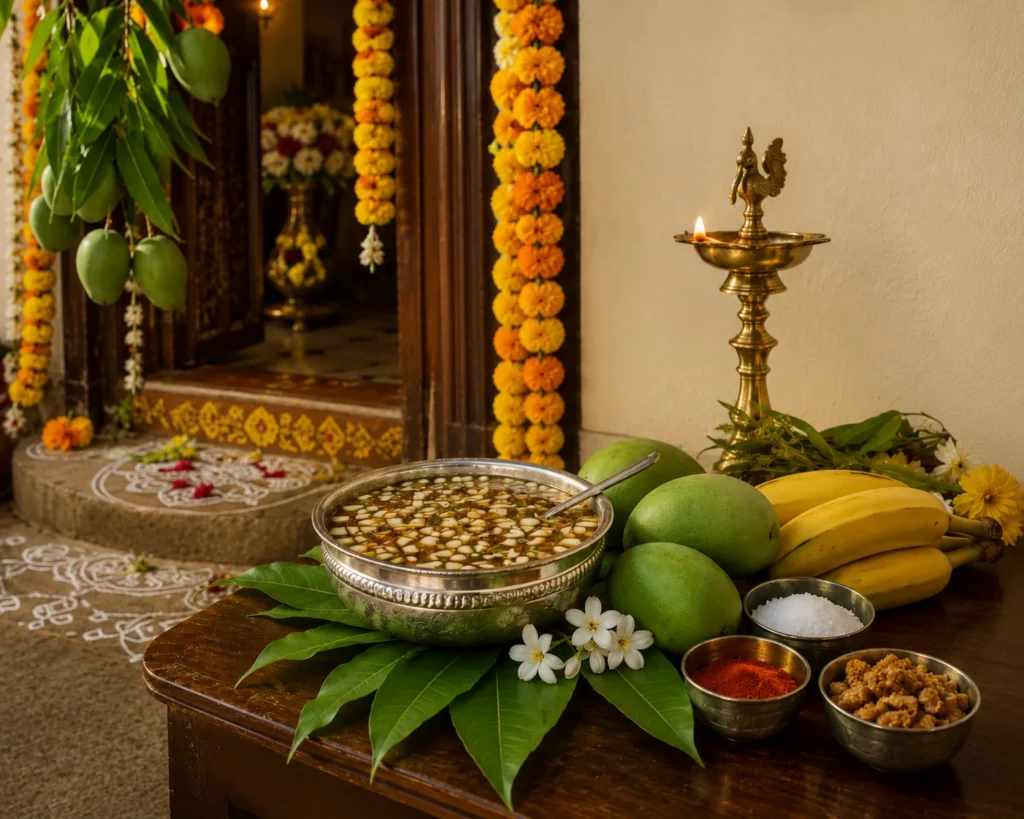
Devotees begin the New Year with prayers, temple visits, Panchanga Shravana, festive meals, and the preparation of the sacred Ugadi Pachadi.
Festival Highlights

HINDU NEW YEAR CELEBRATIONS
Ugadi marks the beginning of a new lunar calendar year and is celebrated with devotion, positivity, and festive joy.
The celebration symbolizes:
- New beginnings
- Spiritual renewal
- Growth and prosperity
- Happiness and positivity
SPRING FESTIVAL TRADITIONS
The arrival of spring during Ugadi represents freshness, new life, and abundance throughout nature and human life.
The spring season signifies:
- Prosperity and well-being
- New opportunities
- Happiness and growth
- Positive spiritual energy
PANCHANGA SHRAVANA
One of the most important traditions of Ugadi is Panchanga Shravana, where scholars explain the yearly Hindu almanac and forecasts for the New Year.
The Panchanga includes:
- Predictions for the year
- Seasonal and rainfall forecasts
- Agricultural guidance
- Spiritual and astrological insights
UGADI PACHADI PREPARATION
Devotees prepare the sacred Ugadi Pachadi made from neem flowers, honey, sugar, and ingredients representing different tastes of life.
The preparation symbolizes:
- Joy and sorrow in life
- Balance and acceptance
- Spiritual understanding
- Life’s varied experiences
SPECIAL TEMPLE ABHISHEKAMS
On Ugadi day, special Abhishekams are performed for all temple deities with sacred offerings and devotional chanting.
The rituals include:
- Panchamrutam offerings
- Vedic chanting
- Archana and pujas
- Temple blessings and prasadam
TELUGU & KANNADA PANCHANGA RECITATIONS
Special Panchanga Shravana is conducted in both Telugu and Kannada for devotees attending the temple celebrations.
The recitations include:
- New Year predictions
- Spiritual guidance
- Community participation
- Traditional devotional practices
COMMUNITY FESTIVE CELEBRATIONS
Families and devotees gather together at the temple to celebrate the New Year with prayers, festive traditions, prasadam, and spiritual joy.
The celebrations include:
- Family temple visits
- Traditional festive attire
- Devotional gatherings
- Sharing blessings and happiness
Connect With Us
Join Our Spiritual Community
Celebrate the Hindu New Year with devotion, positivity, and spiritual joy at Sri Venkateswara Temple and participate in sacred rituals, Panchanga Shravana, Abhishekams, and festive celebrations.
Welcome the New Year with divine blessings together with the temple community.
Frequently Asked Questions
What is Ugadi?
Ugadi is the Hindu lunar New Year festival celebrated as the beginning of a new calendar year.
What does the word “Ugadi” mean?
What is Panchanga Shravana?
Panchanga Shravana is the traditional recitation and explanation of the Hindu yearly almanac and forecasts.
Why is Ugadi Pachadi important?
Ugadi Pachadi symbolizes the different experiences of life including happiness, sorrow, success, and challenges.
What special rituals are performed during Ugadi?
Special Abhishekams, Panchanga Shravana, pujas, and devotional gatherings are conducted at the temple.
Is Ugadi celebrated only in Andhra Pradesh?
No, Ugadi is celebrated in different forms across several regions including Karnataka and Maharashtra.
What does Ugadi symbolize?
Ugadi symbolizes new beginnings, prosperity, positivity, spiritual renewal, and happiness.
MAY LORD SRI VENKATESWARA BLESS YOUR FAMILY WITH A JOYOUS NEW YEAR
Seek the divine blessings of Lord Sri Venkateswara and Sri Mahalakshmi by participating in the sacred Ugadi celebrations at Sri Venkateswara Temple.